


One Hundred People Take Part in the Liver Health Days Organised by the Digestive Diseases Department and the Cantabria Cohort
To mark World Metabolic Dysfunction-Associated Steatotic Liver Disease (MASLD) Day, celebrated on 12 June, the Cantabria Cohort hosted a series of Liver Health Days in collaboration with healthcare professionals from the Digestive Diseases Department at Marqués de Valdecilla University Hospital.
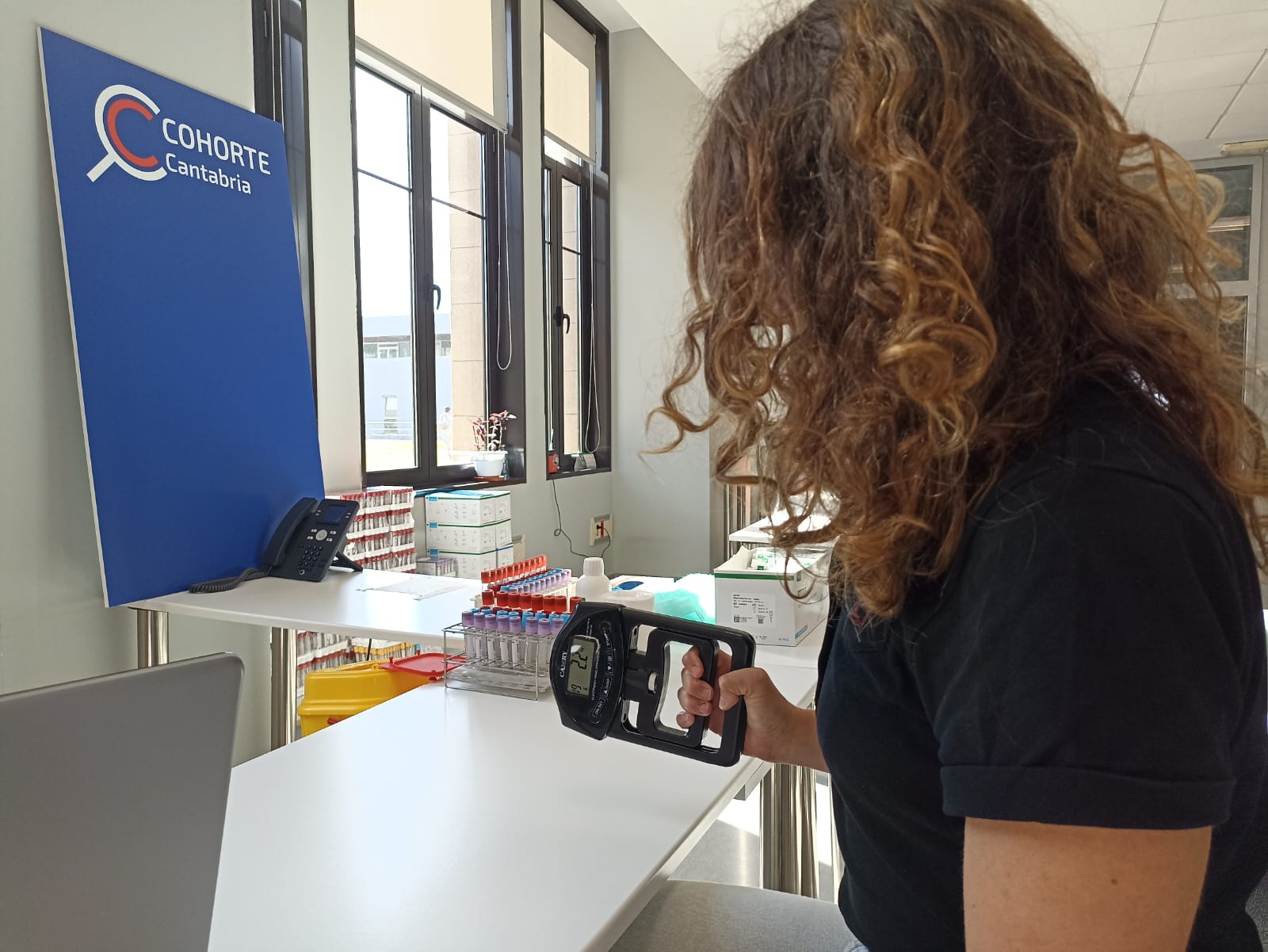
Over the course of two days, one hundred participants selected for this initiative underwent a comprehensive assessment of their hepato-metabolic health through a range of non-invasive tests, including FibroScan®, bioelectrical impedance analysis, blood pressure measurement, functional assessments, blood tests, and lifestyle questionnaires. Among these examinations, FibroScan® stood out as a rapid, painless, and non-invasive technique that enables the evaluation of liver stiffness and the detection of possible signs of liver fibrosis, providing valuable information for the early identification of this type of alteration. The volunteers were adults over the age of 50 with type 2 diabetes who had been randomly selected from among all participants in the Cantabria Cohort. Each participant will receive a personalised report containing their results, together with general recommendations aimed at promoting healthy lifestyle habits.
As part of the initiative, an educational session on liver health and metabolic dysfunction-associated steatotic liver disease was also held and opened to the general public. The session was delivered by Dr Paula Iruzubieta and Dr Javier Crespo, specialists from the Digestive Diseases Department at Marqués de Valdecilla University Hospital.
The aim of this activity was to promote the early detection of liver and metabolic disorders, while also generating scientific knowledge on factors associated with liver health in the population.
At the Cantabria Cohort, we would like to thank everyone who participated in and contributed to making this initiative possible, as well as the healthcare professionals involved for their commitment and dedication. Initiatives such as this reinforce our goal of bringing research closer to the public and contributing to better prevention of chronic diseases through the generation of high-quality scientific knowledge.
We hope to organise more initiatives of this kind in the future, focusing on the prevention of other diseases. We will keep you informed!
Related links: